Nikah, Walima and Baraat: What Each Invitation Should Say
Published 2026-10-08 by the Dawat team
A wedding in Pakistan often has several events, and guests may be invited to some of them and not others. A clear card for each event avoids confusion about time, host and dress. Here is how the three main events differ.
Nikah
The Nikah is the marriage ceremony itself. It is often held at the bride’s home, a hall or a mosque, and usually followed by a meal. The invitation is normally issued by the bride’s family, and the card should name the couple, the date, the Nikah time and the place. A modest, calm design suits it.
Baraat
The Baraat is the day the groom’s procession arrives at the bride’s venue. Cards for the Baraat tend to be grand, and they give the arrival time and often the Rukhsati time. The bride’s family usually hosts the dinner and sends the invitation.
Walima
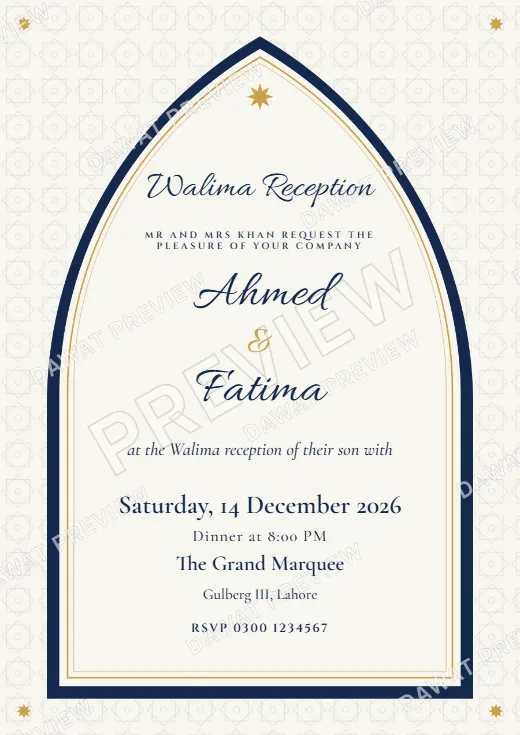
The Walima is the reception hosted by the groom’s family after the wedding. The card is issued by the groom’s side, and states the dinner time. It is often the biggest guest list of the wedding, so clear directions matter.
Quick comparison
- Nikah: the ceremony, usually hosted by the bride’s family.
- Baraat: the wedding day arrival, hosted by the bride’s family.
- Walima: the reception, hosted by the groom’s family.
Wording each card
For the Baraat, mention the arrival time. For the Walima, mention the dinner time. For the Nikah, mention the ceremony time and whether a meal follows. Put the family hosting on the card, because it tells guests whom to call.
You can make all three cards in a matching design so the family’s events look like a set. Start with the Nikah card, then open the Baraat card and the Walima card and pick the same style in each.